
Cap Rates Explained: The Metric That Prices Commercial Real Estate
A plain-English guide to capitalization rates, what moves them, and why they matter far beyond office towers and shopping malls.
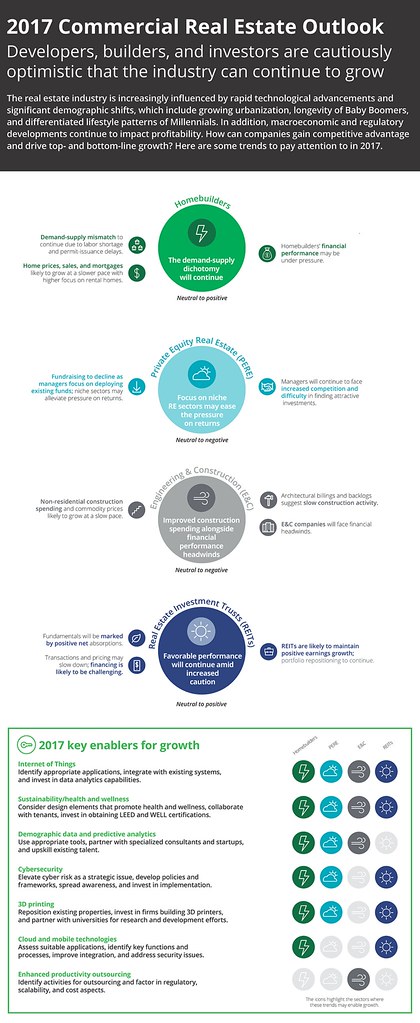
The short answer
- A capitalization rate (cap rate) equals a property's annual net operating income divided by its price, expressed as a percentage.
- Cap rates move inversely to price: for the same income, a lower cap rate means a higher property value, and vice versa.
- Interest rates, perceived risk, property type, location, and tenant quality are the main drivers of cap rate movements.
- A cap rate is not a total-return figure; it ignores financing, appreciation, and capital expenditures, so it should be one input among several.
- This article is educational and not investment advice; property valuation involves judgment and local market expertise.
If you read about a warehouse selling at a 6% cap rate or an apartment complex trading at a 4.5% cap rate, you are looking at the single most common shorthand for pricing income-producing real estate. The capitalization rate, or cap rate, is a simple ratio, but it carries a lot of information about risk, growth expectations, and interest rates baked into a property's price.
The Basic Formula
A cap rate is calculated as: Net Operating Income (NOI) divided by Current Market Value or Purchase Price, expressed as a percentage. NOI is a property's rental and other income minus operating expenses such as property taxes, insurance, utilities, and maintenance, but before debt service (mortgage payments), income taxes, and capital expenditures. For example, a property generating $500,000 in annual NOI that sells for $10 million has a 5% cap rate ($500,000 / $10,000,000).
Because price is in the denominator, cap rates and property values move in opposite directions when NOI is held constant. If investors are willing to accept a lower cap rate (a lower yield) for the same income stream, the implied price rises. If required cap rates rise, the implied price falls.
What Cap Rates Tell You
- An approximate unlevered annual yield an all-cash buyer might expect in the first year of ownership.
- A quick way to compare pricing across similar properties, submarkets, or property types.
- A gauge of market sentiment: falling cap rates across a sector often signal rising investor confidence or lower financing costs; rising cap rates can signal the opposite.
- A tool appraisers and lenders use, alongside comparable sales and income-approach analysis, to sanity-check valuations.
What Moves Cap Rates
- Interest rates and the risk-free rate: Cap rates are often benchmarked against long-term government bond yields, such as the 10-year U.S. Treasury yield tracked by the Federal Reserve Bank of St. Louis's FRED database. When benchmark yields rise, cap rates tend to face upward pressure over time, all else equal, because investors can earn more from safer assets.
- Risk premium: Investors demand extra yield for real estate's illiquidity, vacancy risk, and management intensity. Riskier assets or markets carry higher cap rates than trophy assets in gateway cities.
- Property type and quality: Newer buildings with strong, creditworthy tenants and long leases (think a distribution center leased to a large logistics company) typically trade at lower cap rates than older, functionally obsolete buildings or those with high tenant turnover.
- Location and growth expectations: Markets with strong population and job growth, and limited new supply, often see lower cap rates because buyers expect rents to rise.
- Capital flows: When large amounts of institutional or foreign capital target a sector, such as industrial real estate or multifamily housing, competition for deals can compress cap rates independent of any change in income.
Cap Rate Is Not the Same as Total Return
A common mistake is treating the cap rate as an investor's expected total return. It is not. The cap rate ignores financing (leverage can amplify or reduce equity returns), future rent growth or decline, capital expenditures needed to maintain or reposition the asset, and eventual resale price. Two properties with identical 5% cap rates can produce very different investor outcomes depending on lease structure, capital needs, and market trajectory. Analysts often pair cap rate analysis with a discounted cash flow model and an internal rate of return (IRR) calculation for a fuller picture.
Where the Concept Shows Up for Everyday Investors
Retail investors most often encounter cap rates indirectly, through publicly traded real estate investment trusts (REITs). REIT earnings calls and investor presentations frequently reference portfolio cap rates when discussing acquisitions or dispositions. The U.S. Securities and Exchange Commission's investor education site, Investor.gov, offers a primer on how REITs work and file with regulators, and Nareit, the trade association for REITs, publishes glossary explanations of terms like cap rate for individual investors.
Sources
- 10-Year Treasury Constant Maturity Rate (benchmark for risk-free rate) — Federal Reserve Bank of St. Louis (FRED)
- Real Estate Investment Trusts (REITs) — Investor Basics — U.S. Securities and Exchange Commission (Investor.gov)
- REIT Basics and Glossary — Nareit
- About NCREIF and Real Estate Performance Data — National Council of Real Estate Investment Fiduciaries (NCREIF)
Spotted an error? Tell our corrections desk.
How this article was produced
- Responsible desk:
- Real Estate
- Published:
- 12 Aug 2026, 14:41 UTC
- Last updated:
- 12 Aug 2026, 14:41 UTC
- Verification:
- Figures and quotations checked against primary sources under our fact-checking policy and editorial standards.
- Independence:
- No advertiser or affiliate partner had any involvement in this article — see editorial independence and how we make money.
- Corrections:
- Report a factual error.
This article is general financial information and journalism, not personalised financial, investment, tax or legal advice.