
The 30-Year Mortgage Rate Rose 19 Basis Points to 6.95% the Day After the Fed Raised Rates
Single-family housing starts rebounded 7.6 percent in August. Permits for future building fell. Both readings landed on September 17, within hours of the rate survey.
The short answer
- Freddie Mac's Primary Mortgage Market Survey put the 30-year fixed rate at 6.95 percent on September 17, up from 6.76 percent a week earlier and 6.26 percent a year ago.
- The 15-year fixed rate rose to 6.26 percent from 6.09 percent, against 5.41 percent a year ago.
- Single-family housing starts rose 7.6 percent in August to a 918,000 annual rate, while multifamily starts fell 22.5 percent, leaving total starts down 2.6 percent at 1.275 million.
- Total building permits fell 2.7 percent to 1.394 million, with single-family permits down 1.8 percent - the opposite direction to single-family starts.
Two housing numbers were published on September 17, the day after the Federal Open Market Committee raised its target range for the federal funds rate. They point in different directions, and neither of them captures the rate decision.
The rate survey
Freddie Mac's Primary Mortgage Market Survey put the 30-year fixed-rate average at 6.95 percent. A week earlier it was 6.76 percent. That is a 19 basis point move in one week, and it takes the rate to 69 basis points above where it stood a year ago, when the survey read 6.26 percent.
The 15-year fixed average rose on the same scale, to 6.26 percent from 6.09 percent, against 5.41 percent a year ago. Sam Khater, Freddie Mac's chief economist, said the 30-year rate "continues to fluctuate as markets assess economic data."
Mortgage rates are not set by the federal funds rate. They track the long end of the Treasury curve and the spread that mortgage investors demand on top of it. A week in which the Fed raises short rates can move long yields either way, depending on what the decision says about inflation over the following decade. What the survey records is the level, not the cause.
The construction data
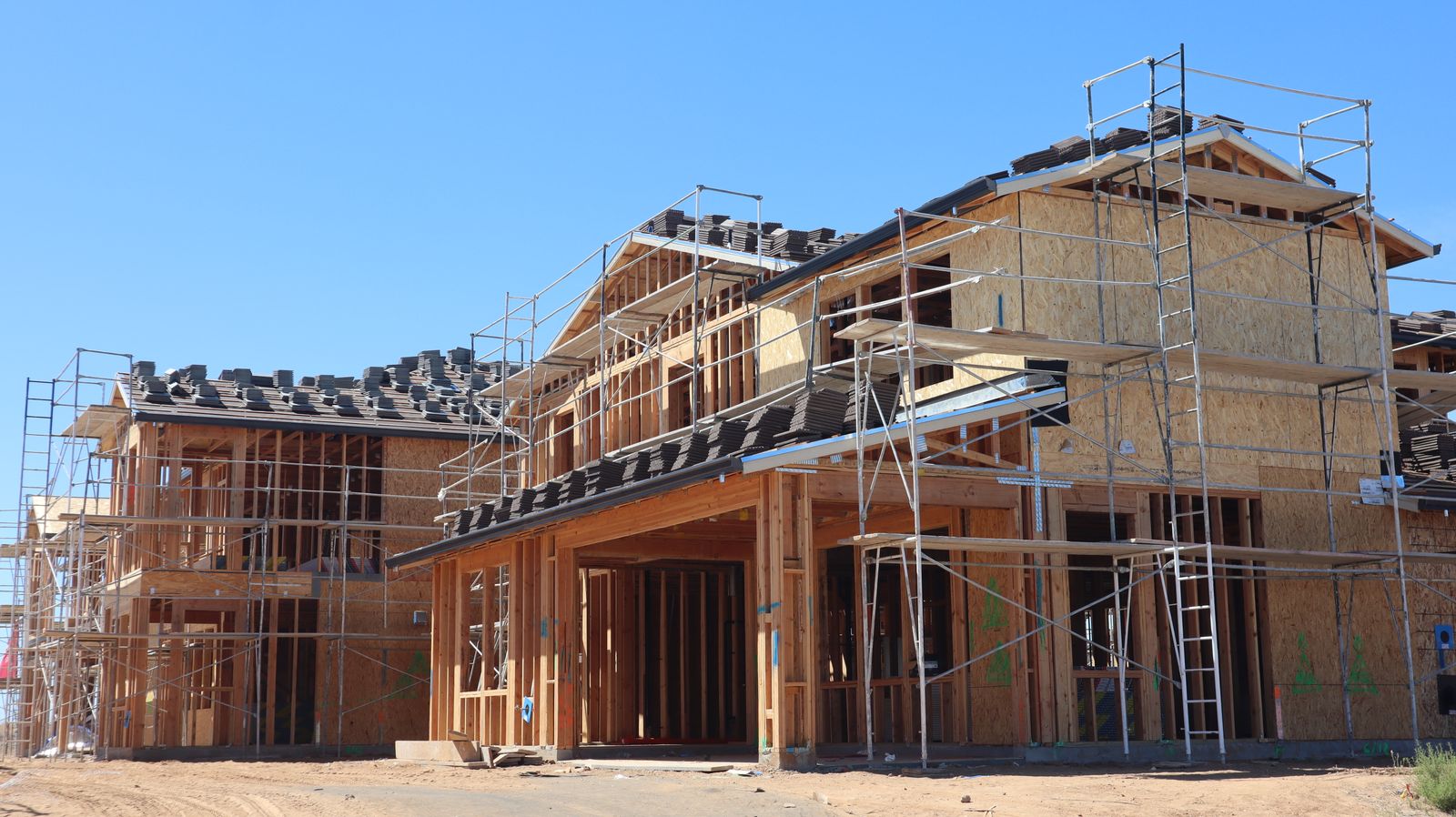
The Census Bureau's new residential construction release for August, also out on September 17, shows single-family starts rising 7.6 percent on the month to a seasonally adjusted annual rate of 918,000 - up 5.2 percent on the year. That is the part of the release builders care about most, and it rebounded.
Everything around it fell:
- Total starts: 1.275 million annual rate, down 2.6 percent on the month and 1.2 percent on the year.
- Multifamily starts: 344,000, down 22.5 percent on the month and 15.5 percent on the year.
- Total permits: 1.394 million, down 2.7 percent on the month but up 3.5 percent on the year.
- Single-family permits: 878,000, down 1.8 percent on the month, up 1.3 percent on the year.
- Multifamily permits: 467,000, down 3.1 percent on the month.
Starts up, permits down
A permit is a builder asking for permission. A start is a builder breaking ground. When starts rise and permits fall in the same month, the pipeline being worked through is larger than the pipeline being refilled. Reuters, reporting the release, noted that the fall in permits for future construction suggested the improvement in single-family starts was likely temporary.
That pattern has appeared before in this cycle. Wallcrest reported in August that starts fell 12.4 percent in July while permits rose 5 percent - the same divergence running the other way.
Sources
- Mortgage Rates Average 6.95% (Primary Mortgage Market Survey, September 17, 2026) — Freddie Mac
- US single-family housing starts rebound in August; building permits fall — Reuters
Spotted an error? Tell our corrections desk.
How this article was produced
- Responsible desk:
- Real Estate
- Published:
- 18 Sept 2026, 05:19 UTC
- Last updated:
- 18 Sept 2026, 05:19 UTC
- Verification:
- Figures and quotations checked against primary sources under our fact-checking policy and editorial standards.
- Independence:
- No advertiser or affiliate partner had any involvement in this article — see editorial independence and how we make money.
- Corrections:
- Report a factual error.
This article is general financial information and journalism, not personalised financial, investment, tax or legal advice.